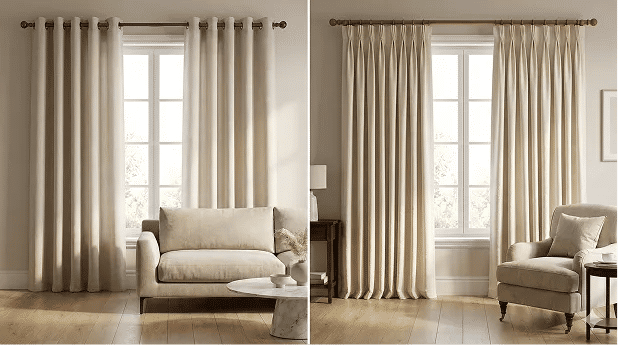
Your living room is the heart of your home, and the right window treatment can define its entire atmosphere. Two heading styles come up in almost every consultation — American-style and pleated — and while both can look excellent, they create genuinely different effects. This guide walks through how they differ, so you can choose the one that actually fits your room.
The Core Difference
The heading — how the top of the curtain gathers onto the rod or track — is what separates these two styles. American-style curtains hang with a flatter, softer drape and a more relaxed silhouette. Pleated curtains use structured folds built into the top of the panel, giving the fabric a tailored, deliberate shape that holds even when the curtain is still.
American-Style Curtains: What They Offer
American-style panels drape simply, with minimal structure at the top, which makes them feel lighter and less formal. They suit rooms where you want the curtain to feel like a soft backdrop rather than a focal point — casual living rooms, bedrooms, and family spaces where the overall mood leans relaxed.
Pleated Curtains: What They Offer
Pleated curtains hold a defined, repeating fold pattern across the top of the panel, which gives them a more tailored, formal presence. They tend to suit living rooms used for hosting, majlis-style seating areas, and spaces where the curtains are meant to read as a considered design element rather than background fabric.
Neither style is objectively better — the right choice depends on whether you want the curtain to disappear into the room's mood or actively shape it.
Side-by-Side Comparison
| Factor | American-Style | Pleated |
|---|---|---|
| Overall feel | Relaxed, casual | Tailored, formal |
| Fabric use | Less fabric per window | More fabric for the folds |
| Best suited to | Bedrooms, casual living rooms | Formal living rooms, majlis, dining areas |
| Maintenance | Simpler, fewer folds to hold shape | May need occasional re-pressing |
Not sure which style fits your living room?
Message us on WhatsApp — we'll bring samples of both so you can see them against your actual windows.
Which Suits Your Room
Ceiling height, window size, and how the room is actually used all factor into this decision more than personal taste alone. A high-ceilinged, formal living room tends to carry pleated curtains well, since the structured folds have room to read properly from floor to ceiling. A lower-ceilinged, everyday family room often looks more balanced with the simpler American-style drape, which doesn't compete visually with a more compact space.
Fabric and Fullness
Pleated headings generally require more fabric width to build the folds properly, so the same window will typically need more yardage in a pleated style than an American-style panel. This is worth factoring into your decision alongside the visual style itself, particularly for larger windows or a whole-home curtain project where the yardage difference adds up across multiple rooms.
How to Decide
Start with how the room is actually used, not just how it looks in photos. A room meant for hosting and formal gatherings generally leans toward pleated; a room meant for everyday, relaxed living generally leans toward American-style. If you're still unsure, bringing both fabric and heading samples into the actual room — under its actual light — settles the question faster than any general rule of thumb.
Frequently Asked Questions
Pleated curtains generally read as more formal, since the structured folds give the panel a tailored, deliberate look. American-style curtains have a softer, more relaxed drape that suits casual living rooms well.
Yes, generally. The folds in a pleated heading are built from extra fabric width, so a pleated curtain typically uses more material than an American-style panel of the same window size.
American-style curtains are usually simpler to maintain, since there are fewer structured folds to hold their shape. Pleated headings can lose crispness over time and occasionally need re-pressing or adjustment.
Yes. It's common to use pleated curtains in more formal rooms like a majlis or dining area, and American-style curtains in bedrooms or casual living spaces.
Both styles accommodate blackout lining well. The choice between them comes down to the look you want, not a technical limitation of either heading style.