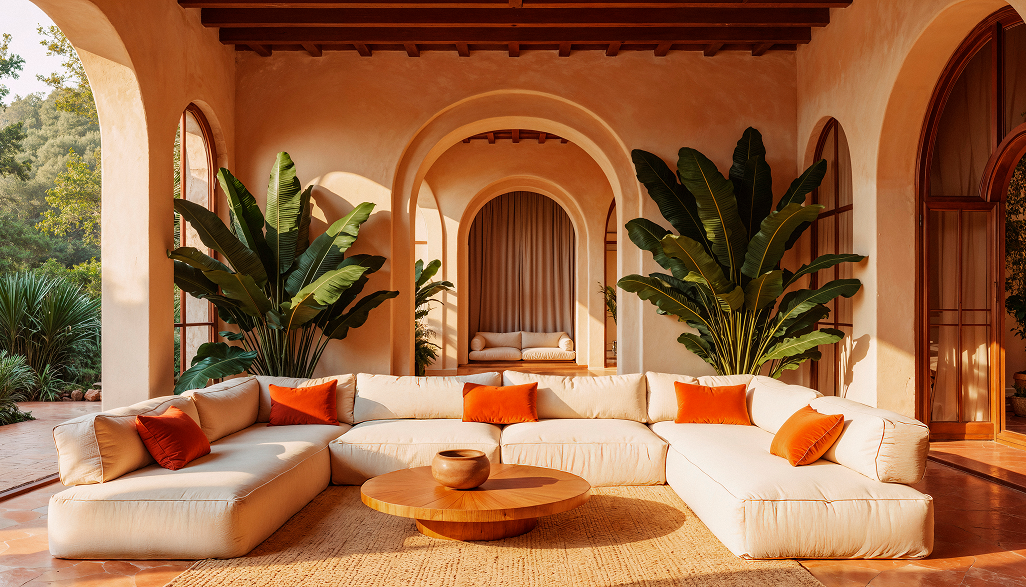
Most people who ask us for a "blended" Majlis don't actually want a room that's half traditional furniture and half modern furniture sitting side by side. What they usually want is a room that feels like it belongs to their family's history without looking like it was decorated decades ago. Those are different problems, and the second one has a more reliable solution than just mixing old and new pieces at random.
Think in Layers, Not Half and Half
A Majlis is really made up of several separate design layers — the frame and woodwork, the fabric and pattern, the color palette, the seating format, the lighting, and the accessories in the room. Blending well usually means picking one or two of these layers to carry the heritage weight, and deliberately keeping the rest current. Trying to make every single layer "half traditional, half modern" is what tends to produce a room that feels indecisive rather than considered.
Let the Frame Carry the History
Of all the layers, the wood frame is usually the best one to let carry the heritage. It's structural, it's not something you change often, and a genuinely well-carved traditional frame reads as intentional heritage rather than dated, even decades after it's built. We've written before about keeping an old carved frame and reupholstering completely differently on top of it — this is the same principle, just applied deliberately from the start rather than as a repair decision.
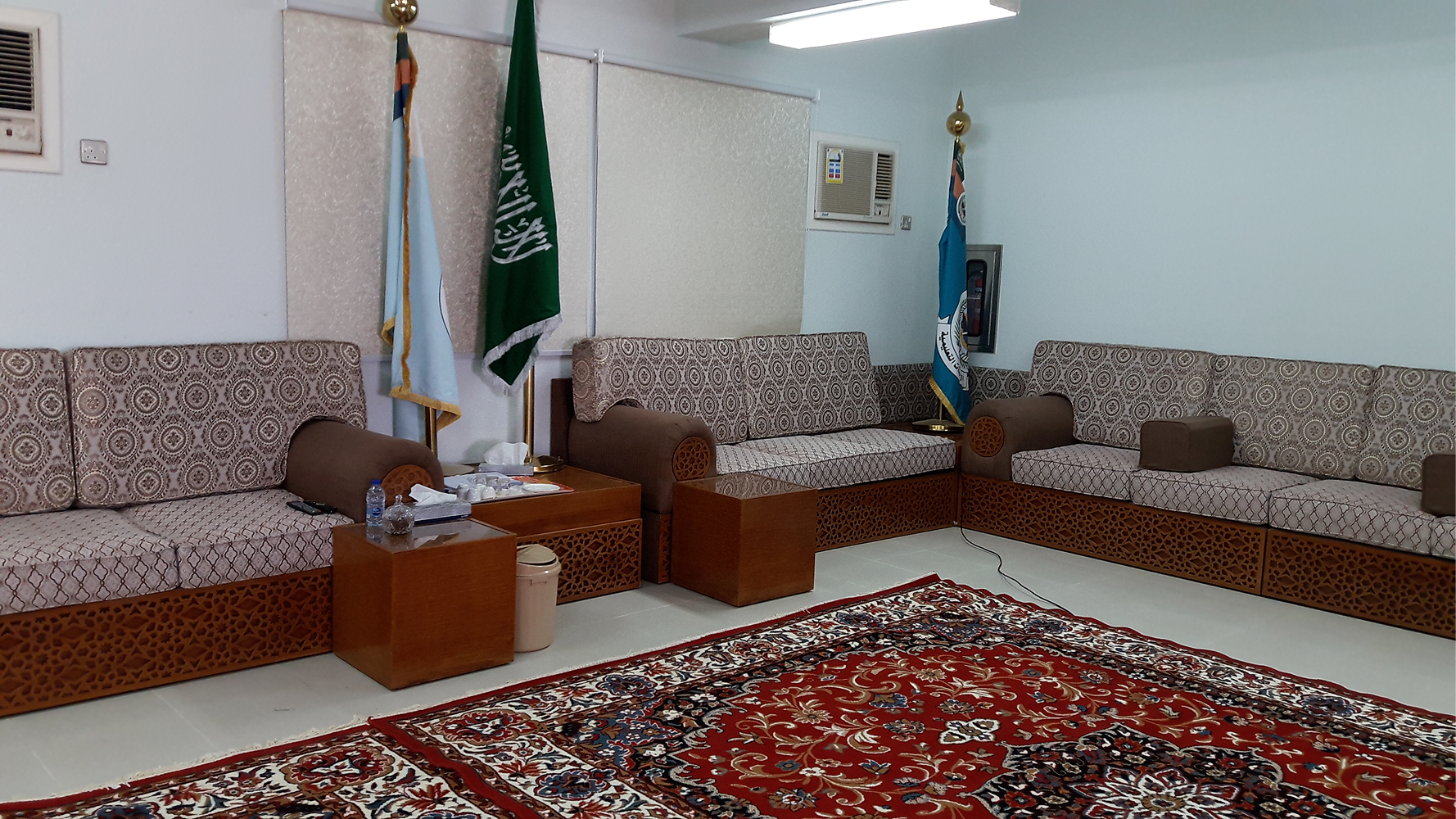
Heritage doesn't need to show up everywhere in the room to be felt. Often it just needs to show up once, somewhere structural, and the rest of the room can move freely.
Keep the Palette Current
If the frame is already doing the heritage work, the color palette doesn't need to repeat it. This is where the "one bold accent instead of ten" approach we've discussed before earns its place in a blended room specifically — a restrained, contemporary palette sitting on top of a traditionally carved frame reads as considered rather than confused, because the two layers aren't competing to say the same thing.
Modernize the Seating Format
This is a layer people don't think to touch, but it's one of the more effective ones. A traditional carved wood base doesn't require a traditional continuous seating line — the same frame language can support a sectional-style layout or a slightly curved arrangement, both of which read as more current than the classic wall-to-wall row. Changing the format while keeping the woodwork traditional is often more effective at feeling "blended" than changing the fabric alone.
Have an old frame you'd like to modernize?
Send us a photo on WhatsApp — we'll tell you honestly what's possible with what you already have.
One Traditional Accessory, Not Many
A single symbolic piece — a large calligraphy artwork, a traditional dallah displayed rather than used, one genuinely old carved side table — usually carries more weight than scattering several heritage objects around the room. It reads as a deliberate nod rather than an attempt to make the whole room feel like a museum of family history. One well-placed piece does the job several smaller ones can't.
Where Not to Mix Within the Same Layer
The one place this approach tends to break down is within a single layer rather than across layers — for example, using both a dense traditional pattern and a stripped-back minimal pattern on cushions in the same seating run. Pick a direction for each individual layer and commit to it there; let the contrast happen between layers, not within one.
Frequently Asked Questions
If you already have a good wood frame, start there — let it carry the heritage and build the rest of the room around a more current palette and format. If you're starting from scratch, the frame is still usually the layer worth investing in traditionally.
Yes — this is exactly the kind of decision that's easier in person, looking at your actual room and any existing pieces. We'll give you an honest recommendation during a free assessment.
Not inherently — cost depends more on fabric choice, frame complexity, and size than on whether the final look is blended or singular in style.