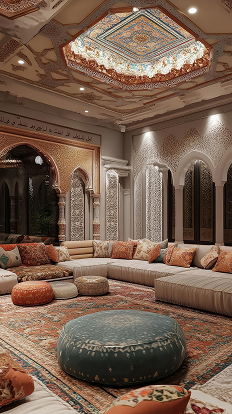
A women's Majlis usually gets used differently than a Majlis Rijal — longer visits, more relaxed conversation, gatherings that stretch from afternoon tea into dinner without anyone really planning it that way. The design should follow that rhythm rather than fight it.
Setting the Tone: Warm, Not Formal
Where a Majlis Rijal often leans toward restraint and formality, a women's Majlis usually works better leaning the other way — warmer, softer, a little more decorative. That doesn't mean less considered. If anything, the details matter more here, because this is a room people tend to sit in for hours, not just pass through.
Color and Texture Choices That Work
Softer palettes tend to age well in this kind of room — dusty rose, sage, warm cream, soft gold — often paired with one deeper accent rather than left completely neutral. Texture does a lot of work too. Velvet and chenille both read as inviting rather than stiff, and they photograph well in low, warm light, which matters more than people expect once you factor in how often a room like this ends up in phone photos from family gatherings.
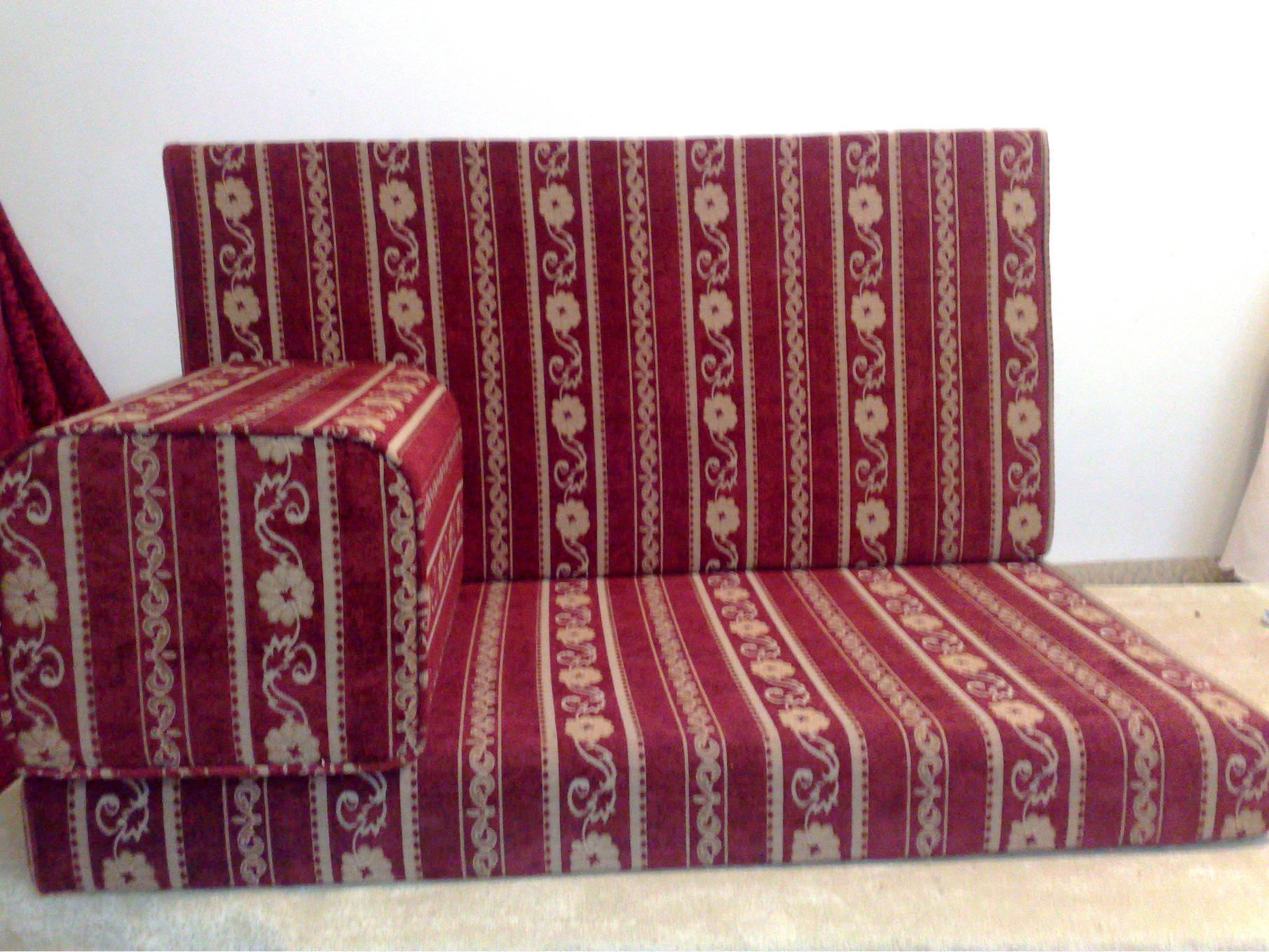
The rooms that get complimented most aren't the boldest ones. They're the ones where someone clearly thought about how it would actually feel to sit there for three hours.
Comfort Over Formality
This is where we'd push back a little on tradition, honestly. Long, straight-backed seating looks striking, but it isn't always the most comfortable for a gathering that runs for hours. A slightly deeper seat, softer cushioning, and a mix of low tables scattered within reach rather than one long run along the wall tends to suit longer, more relaxed visits better than the strict formal layout does.
Picturing your own women's Majlis?
Send us a photo of your room on WhatsApp and we'll talk through fabric and layout options.
Tables and Service Details
Tea and sweets service tends to need more surface space than a simple coffee round — think trays, multiple small plates, sometimes fruit or dessert alongside the tea itself. A few smaller side tables placed generously around the room usually works better than one central table everyone has to reach across for. Worth planning this out with actual furniture placement in mind, not as an afterthought once the seating's already in.
Lighting That Flatters the Room
Warm, layered lighting suits this room far better than a single bright overhead source — a mix of a softer ceiling fixture with a couple of lower lamp-height lights tends to flatter both the fabric colors and the people sitting in the room. It also just makes a multi-hour gathering feel less like sitting under office lighting by the third hour.
What Tends to Go Wrong
- Choosing fabric purely for how it photographs on day one, without checking how it holds up after regular tea and dessert service.
- One central table only, which gets crowded fast once trays start coming out.
- Cold, bright lighting left over from a general renovation, rather than chosen specifically for this room.
- Prioritizing a striking look over how the seating actually feels after the first hour of sitting in it.
Frequently Asked Questions
Velvet and chenille both tend to work well — soft to sit on, warm in appearance, and reasonably forgiving of everyday tea and dessert service. We'll bring samples in a few different weights during your free assessment.
Not necessarily. It's common for the two rooms to share a general design language — similar wood tones, for instance — while differing in color palette and seating comfort to suit how each room actually gets used.
It depends on the room size, but generally more smaller tables spread around the seating work better than one large central table, especially once tea and dessert trays are involved.